
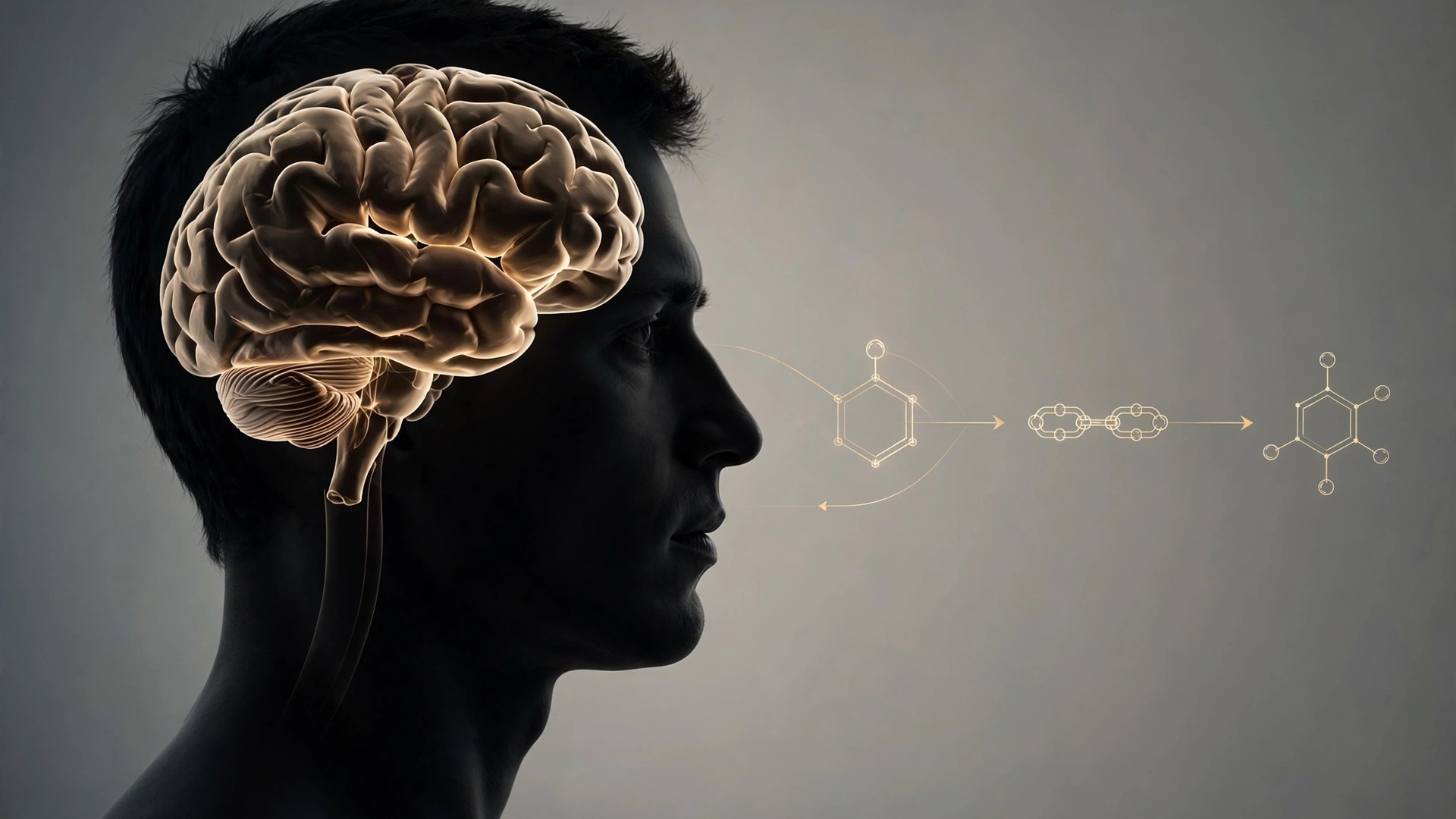
Our brain can make fructose. That surprised me too.
We usually think of fructose as something we consume in fruit, juice, table sugar, and sweetened drinks. A small human study found that our brain can also produce it from glucose when blood sugar is experimentally raised. The study involved eight healthy adults over four hours. It confirmed that this pathway exists in the human brain. Its size and design leave the long term effects unanswered. What follows is what the evidence shows, where it stops, and what remains a hypothesis.
Researchers are now asking whether repeated activation of this pathway could affect how our brain produces and uses energy over time.
The brain needs energy
Alzheimer’s disease is often discussed through amyloid plaques and tau tangles. Researchers also study changes in glucose use, insulin signaling, inflammation, blood flow, and mitochondrial function. Our brain needs a steady supply of energy. It also depends on healthy blood vessels, stable glucose regulation, sleep, movement, hearing, vision, and social connection.
The 2024 Lancet Commission identified 14 potentially modifiable risk factors for dementia. They include high blood pressure, diabetes, high LDL cholesterol, smoking, physical inactivity, excessive alcohol use, hearing loss, untreated vision loss, depression, obesity, social isolation, traumatic brain injury, air pollution, and limited education.
Researchers estimated that addressing these factors across the lifespan could prevent or delay around 45 percent of dementia cases. That number describes risk across populations. It cannot predict what will happen to one person.
Where fructose comes in
Fructose occurs naturally in fruit and honey. It is also part of table sugar and is commonly found in sweetened drinks and many ultra processed foods.
Whole fruit brings fructose with fiber, water, chewing, and nutrients. Juice and sweetened drinks deliver sugar much faster and in a more concentrated form.
Fructose metabolism can temporarily lower ATP, the immediate energy available inside our cells. It can also increase uric acid production. Experimental research connects excessive fructose metabolism with oxidative stress, mitochondrial dysfunction, insulin resistance, and fat accumulation. These effects are well studied in the liver and other metabolic tissues, which is where this evidence comes from. Their role inside the human brain is much less settled.
How the brain makes fructose
In the Yale study, researchers gave eight healthy adults a glucose infusion that raised blood glucose over four hours. Brain fructose increased while blood fructose changed very little. The researchers concluded that glucose was being converted into fructose inside the brain through the polyol pathway.
The polyol pathway is a series of chemical steps that changes glucose into sorbitol and then fructose. The pathway becomes more active when glucose availability is high.
The study showed that the human brain has this metabolic capability. It did not examine ordinary meals, long term dietary patterns, cognitive decline, or Alzheimer’s disease. We still need larger human studies to understand when the pathway becomes clinically important.
The Alzheimer’s hypothesis
Some researchers propose that frequent fructose production and metabolism inside the brain could lower cellular energy and contribute to mitochondrial stress, inflammation, insulin resistance, and impaired glucose use.
The theory draws from animal studies, cell research, metabolic mechanisms, and the small human study showing that the brain can produce fructose. It remains a hypothesis. Human research has yet to establish brain fructose as a cause of Alzheimer’s disease.
Alzheimer’s disease develops through many interacting influences. Genetics, age, vascular health, metabolic health, sleep, environment, and life experience can all shape risk. Diet is part of that larger picture. One three year randomized trial found similar cognitive and brain imaging outcomes in participants following the MIND diet and those following a control diet with mild calorie restriction. One dietary pattern cannot carry the entire burden of brain health.
Where we can focus
Sweetened drinks are a sensible place to start. Soda, sweetened coffee, energy drinks, sports drinks, juice, and flavored beverages can deliver a large sugar load quickly with little fullness. Whole fruit can stay. Eat the orange. Keep the berries. Choose fruit that requires chewing.
The wider pattern matters too:
- Check blood pressure regularly.
- Review glucose, HbA1c, triglycerides, HDL cholesterol, LDL cholesterol, and liver health with a qualified clinician.
- Build and maintain muscle.
- Move consistently through the week.
- Protect sleep and address possible sleep apnea.
- Avoid smoking and limit alcohol.
- Address hearing and vision changes.
- Stay socially and mentally engaged.
- Bring new or worsening cognitive symptoms to a qualified clinician.
These steps support the vascular and metabolic systems our brain uses every day. They also address several of the dementia risk factors supported by the strongest available evidence.
Start with the pattern
Changes in focus can sit alongside changes in sleep, appetite, energy, blood sugar, body composition, and mood. Looking at the full pattern gives us a clearer place to begin. The Health Archetype Quiz helps identify the metabolic and hormonal pattern that may be shaping what we are experiencing. It takes a few minutes and gives us a focused next step.
Take the Health Archetype Quiz (https://saujanyavemuri.com/overlap-decade-series/health-archetype/?utm_source=sales-page&utm_medium=escape-hatch&utm_campaign=soft-launch)
This article is educational and does not replace individual medical assessment, diagnosis, or treatment. New, progressive, or concerning cognitive symptoms deserve prompt clinical evaluation.
Sources
- Hwang JJ, Jiang L, Hamza M, Dai F, Belfort-DeAguiar R, Cline G, Rothman DL, Mason G, Sherwin RS. The human brain produces fructose from glucose. JCI Insight. 2017;2(4):e90508. doi:10.1172/jci.insight.90508.
- Johnson RJ, Gomez Pinilla F, Nagel M, et al. Cerebral fructose metabolism as a potential mechanism driving Alzheimer’s disease. Front Aging Neurosci. 2020;12:560865. doi:10.3389/fnagi.2020.560865. (Hypothesis paper.)
- Livingston G, Huntley J, Liu KY, et al. Dementia prevention, intervention, and care: 2024 report of the Lancet Standing Commission. Lancet. 2024;404:572-628. doi:10.1016/S0140-6736(24)01296-0.
- Barnes LL, Dhana K, Liu X, et al. Trial of the MIND diet for prevention of cognitive decline in older persons. N Engl J Med. 2023;389:602-611. doi:10.1056/NEJMoa2302368.
- Hannou SA, Haslam DE, McKeown NM, Herman MA. Fructose metabolism and metabolic disease. J Clin Invest. 2018;128(2):545-555. doi:10.1172/JCI96702. (Review; mechanistic evidence primarily hepatic/systemic, not brain-specific.)
Clinical note: This article provides general education, not individualized medical advice. Discuss symptoms, treatments, hormones, medications, supplements, and significant health decisions with a qualified clinician.
Work With Saujanya
Explore menopause and metabolic-health consulting, speaking, and strategic support for individuals and organizations: Services (https://saujanyavemuri.com/services)
Additional Resources
- The Overlap Decade (https://saujanyavemuri.com/overlap-decade)
- Discover Your Health Archetype (https://saujanyavemuri.com/overlap-decade-series/health-archetype/?utm_source=sales-page&utm_medium=escape-hatch&utm_campaign=soft-launch)